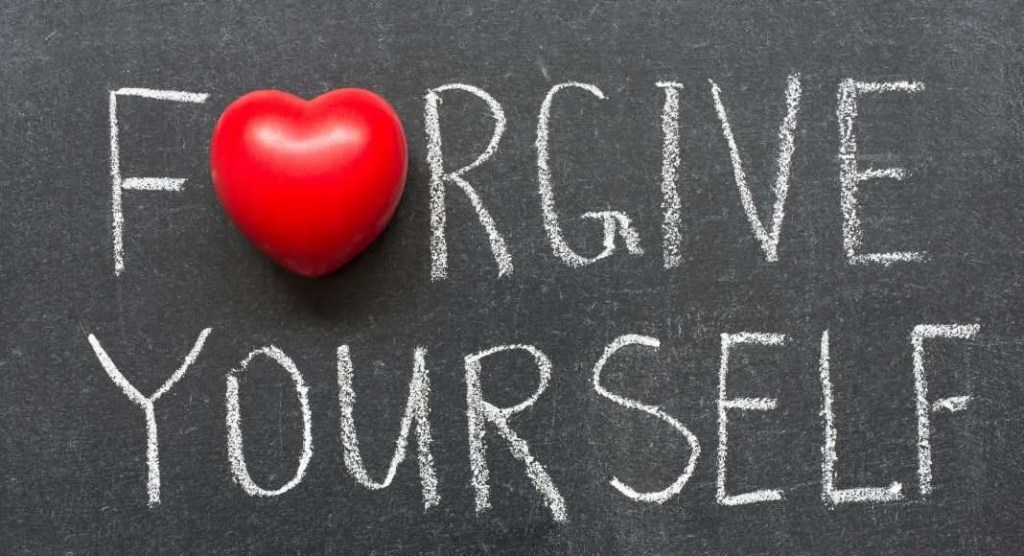
We need to forgive ourselves first. It doesn’t matter what happened, what we did. What it costs; it’s done. And I could say it’s water under the bridge, but that wouldn’t be a proper metaphor. Because sometimes with what happens, those emotional scares run deep. And the consequences of them still affect the present. So, you’re supposed to accept it. Accept that we can’t change the past. As much as anyone in recovery would like to. Just as much as anyone who’s been in our shoes, would like to pretend something didn’t happen. And even still, it leaves a bitter taste in our mouth. And what’s worse than that, we find out that ignorance is not bliss.
We must accept that whatever harm we caused to others, ourselves, situations…is what it is. It’s not going to go away. And if it didn’t happen, no one in recovery would be in recovery. So, by accepting that, with the renewed connection with our higher power, we learn that forgiveness isn’t just for us to receive from a heart-felt apology. It’s for us to be free from what we did. So, we can move on with our lives in recovery. So, by accepting the wreckage of the past, being able to forgive ourselves leads to personal freedom. That freedom should lead to peace. And ultimately that’s our goal. To make peace with ourselves and move on with our lives, soberly.
With recovery, healing, growth, none of this is possible without acknowledging the past. Not sugar coating it, not pretending it never happened, but recognizing it for what it is. And it is something that shaped us, left its mark, but does not define our future.
I know personally that self-forgiveness is one of the hardest things that some people may struggle with because it requires a level of honesty and vulnerability that a lot of people would much rather avoid. And there is this tendency to believe that if we punish ourselves enough, we’ll somehow make up for the pain we cause. But that’s not how recovery works. Shame doesn’t heal, it only chains us to our past mistakes. It keeps us stagnant, stuck in a loop of regret. Acceptance, though—not passive resignation, but real, conscious acknowledgement—allows us to move forward.
Reconnecting with our higher power—whether that’s through faith, spiritualty, or simply tapping into one’s inner strength—is a crucial step. Because self-forgiveness doesn’t mean forgetting the past; it means being able to face it without letting it rule over you. It’s about learning from it, integrating it into the story of who we are, and choosing to step forward with wisdom rather than guilt.
And freedom—real, genuine freedom—is only possible when we stop being prisoners of our past. That peace? It won’t come overnight. But every step toward self-acceptance brings us closer to it. It’s a hard journey, but it’s worth taking.
 Listen Linda
Leave a comment