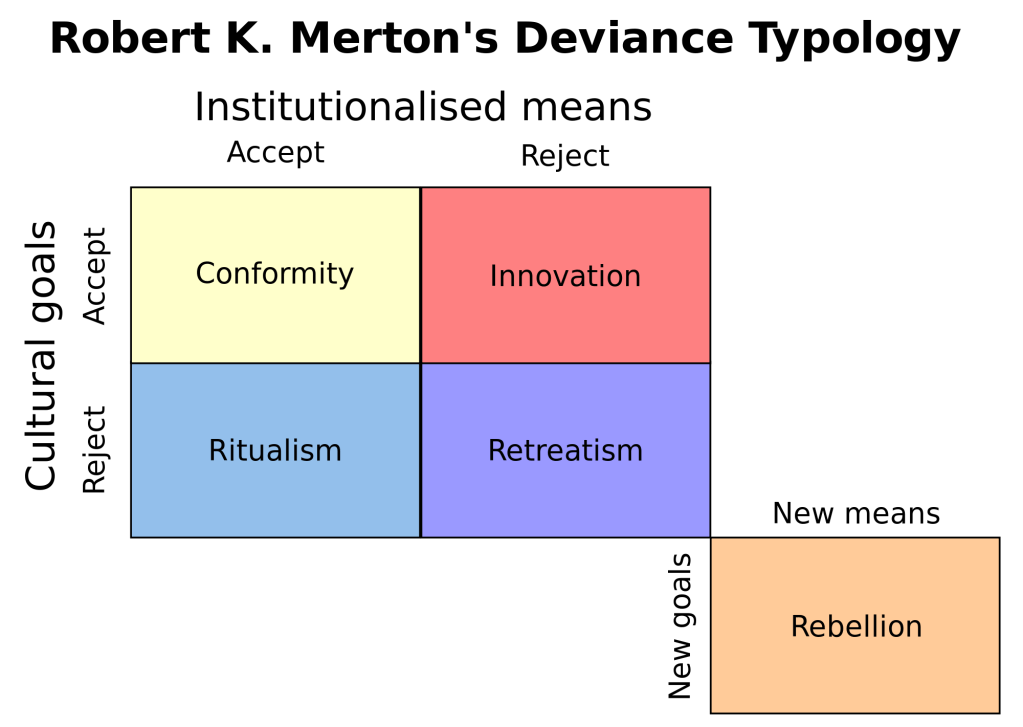
In Merton’s Strain Theory, there are five modes of individual adaptation to societal pressures:
- Conformity
- Innovation
- Ritualism
- Retreatism
- Rebellion
With Innovation, people accept society’s goals—such wealth or status—but have turned into deviant ways to obtain them. From the perspective of addiction, an individual might desire emotional stability or happiness but lacking in healthy coping mechanisms or access to mental health resources, turn to a substance to manufacture temporary relief—an “innovation” in coping, even though it is a harmful one.
With Retreatism, retreatist abandon both societal goals and the conventional methods of achieving them. People who suffer from severe addiction often fit into this category—with the pressures of financial success, career demands, or social expectations becoming overwhelming. These individuals will retreat entirely, turning to drugs or alcohol or both, to escape those burdens.
So, it’s unfortunate that when homelessness is due to addiction or alcoholism, these people will remove themselves from relationships, jobs, other social circles, in a way to retreat as they no longer participate in structured societal ambitions.
With Rebellion, it’s a new path forward. Rebels often reject both conventional societal goals and traditional means, but instead of withdrawing, they propose new ideas for new values and approaches. Recovery often fits here—especially when individuals reject harmful societal narratives around addiction, such as stigma, punishment, or unrealistic success ideals, and instead embrace alternative lifestyles emphasizing mental health, self-care, and peer support.
An example would be communities advocating harm reduction (needle exchange programs, decriminalization of drug addiction, or therapy-driven rehabilitation) are all rooted in rebellion against conventional punitive systems. They reject the idea that addiction should be met with criminal punishment but instead seek a more compassionate solution.
Since “recovery” isn’t just personal—it deeply connected to social structures. Like support groups, advocacy movements, and alternative recovery philosophies often emerge because of the mainstream solutions (incarceration, forced detox, stigma-based interventions) do fail to address the systemic causes of addiction. This is why sociological theories like Merton’s remain relevant—as they highlight how social forces shape individual struggles and responses
Addiction isn’t a personal failure, by any means it’s often the symptom of social limitations. And recovery isn’t just about stopping substance use. It’s challenging harmful narratives and reshaping support systems to allow people to thrive.
 Listen Linda
Leave a comment